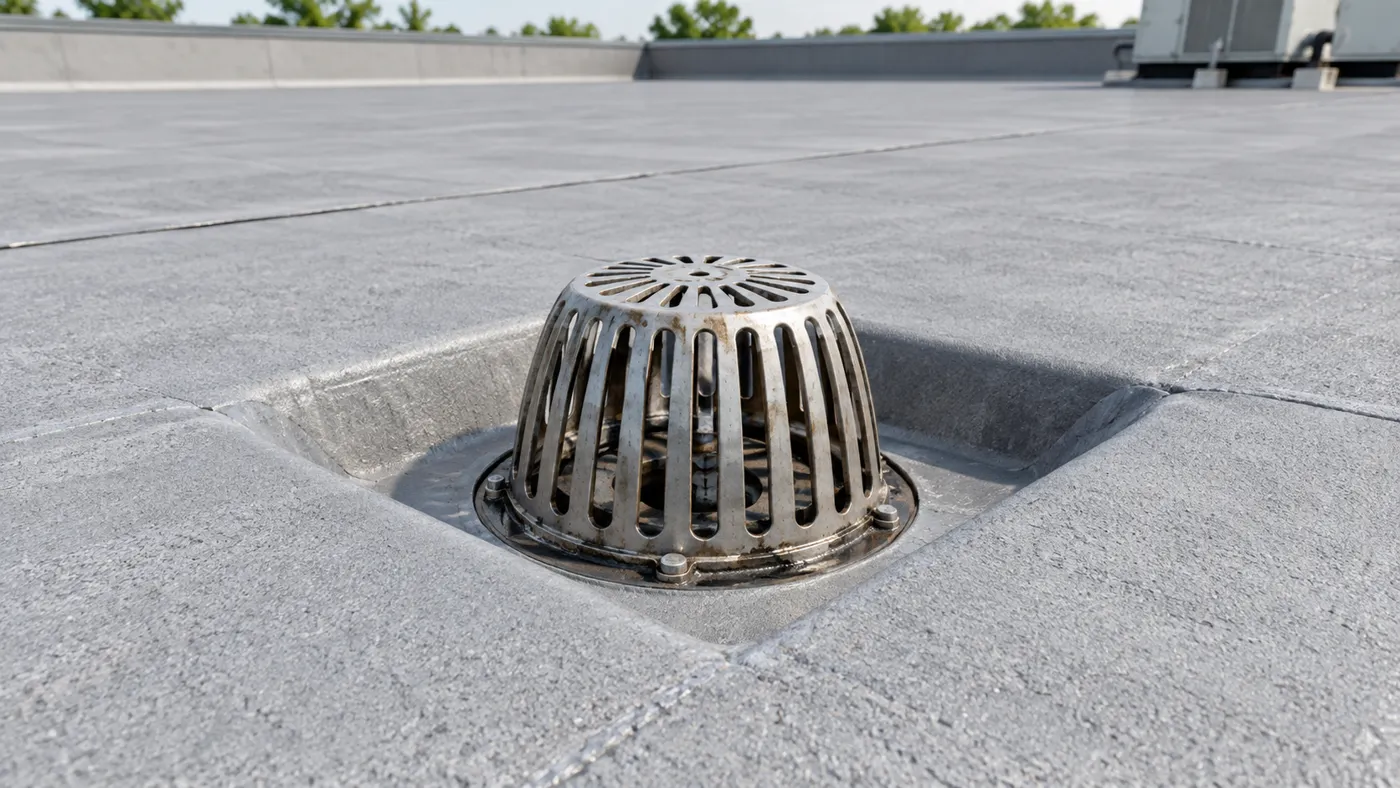
Find out why water remains
Persistent standing water can relate to blocked drainage, roof geometry, insulation layout or movement in the assembly. The cause matters more than the visible puddle alone. Record where water collects and how conditions change after rainfall, using safe observations available from building management.
Review the entire drainage path
The assessment should consider the roof surface, drains or scuppers, overflow provisions and downstream discharge. Correcting one restriction may reveal another issue. Drainage modifications may require coordination with a designer or other qualified professional, especially where structural concerns are present.
Include drainage in replacement planning
A new membrane does not automatically correct low areas. Replacement proposals should explain whether tapered insulation, drain modifications or other measures are included. Ask how the planned assembly will move water and how existing rooftop equipment affects that design.
Avoid isolated product promises
Do not select a coating or membrane solely because it is described as water resistant. Product requirements, warranty terms and the building’s drainage conditions still matter. Request a scope that addresses the underlying condition and identifies any limitations left in place.
Questions before you book
Should building staff cut a new drain opening?
No. Roof and drainage modifications require appropriate professional evaluation and coordination. Unplanned openings can damage the assembly and create additional hazards.