Repair the source, not only the ceiling stain
A stain inside a building can appear well away from the roof opening. Water can travel along insulation, decking and structural members before it becomes visible. A useful repair assessment connects the indoor symptom with roof conditions, recent weather and previous work. Tell us whether the leak occurs during every rain, only with wind, or after rooftop equipment runs.
What a repair scope should identify
Ask for photographs and a description of the affected seams, penetrations, edge metal or flashing. A proposal should name the existing membrane, compatible repair materials and preparation method. If wet insulation or deteriorated decking is found, discuss how that changes the work before covering the area. A surface patch alone does not resolve damage below the membrane.
When a localized repair makes sense
A limited defect in an otherwise serviceable roof may be a reasonable repair candidate. Repeated leaks across multiple roof sections, widespread moisture or an approaching capital replacement can change the economics. Request a clear distinction between temporary water control and a permanent repair, including what remains outside the proposed scope.
Prepare your Huntsville property for assessment
Collect prior invoices, warranty documents and a simple map of the affected rooms. Identify roof access, tenant restrictions and the person authorized to approve work. Avoid climbing onto a wet or damaged roof. Share these details when requesting an assessment so we can confirm capability, scheduling and any diagnostic fee.
Questions before you book
Can a flat roof leak be repaired without replacing the roof?
Sometimes. The answer depends on the defect, moisture extent, roof condition and whether a compatible lasting repair is available. An inspection is needed before choosing a scope.
Is an inspection the same as an estimate?
Not necessarily. Leak diagnosis or moisture testing may carry a separate charge. Confirm what the visit includes before booking.
Explain the limits of a localized repair
A targeted repair can address a confirmed detail without resolving unrelated aging elsewhere on the roof. We distinguish the reported leak area from the wider roof condition during assessment. Ask what the repair is expected to solve, which areas were evaluated and whether further investigation is recommended before committing to additional work.
Separate temporary protection from permanent work
An active leak may call for an initial response followed by a defined repair when access, weather and materials allow. Confirm availability and the scope when you call; a website request does not reserve an emergency visit. Any temporary measure should have a clear follow-up plan rather than being presented as a completed long-term solution.
Compare repair cost with recurrence and disruption
A small repeated repair can still create operational disruption if the underlying problem remains unresolved. Share earlier repair locations and invoices so the assessment can consider that history. Compare a targeted repair with restoration or replacement when the findings show wider deterioration, rather than deciding solely from the latest leak’s size.
Record the repaired detail and remaining concerns
The handover should identify the materials used, the repair location and any conditions outside the agreed scope. Ask how completion is checked and what maintenance or further assessment is recommended. For a broader picture, explore commercial roof inspections and the roofing budget and timing guide.
Before you approve the work
- Identify the repair area and compatible materials.
- Distinguish temporary measures from the permanent scope.
- Document the completion check and unresolved roof conditions.
Commercial Roof Flashing Repair in Huntsville
Understand repairs at parapets, roof edges, walls and rooftop penetrations before accepting another isolated patch.
Follow the roof transitions
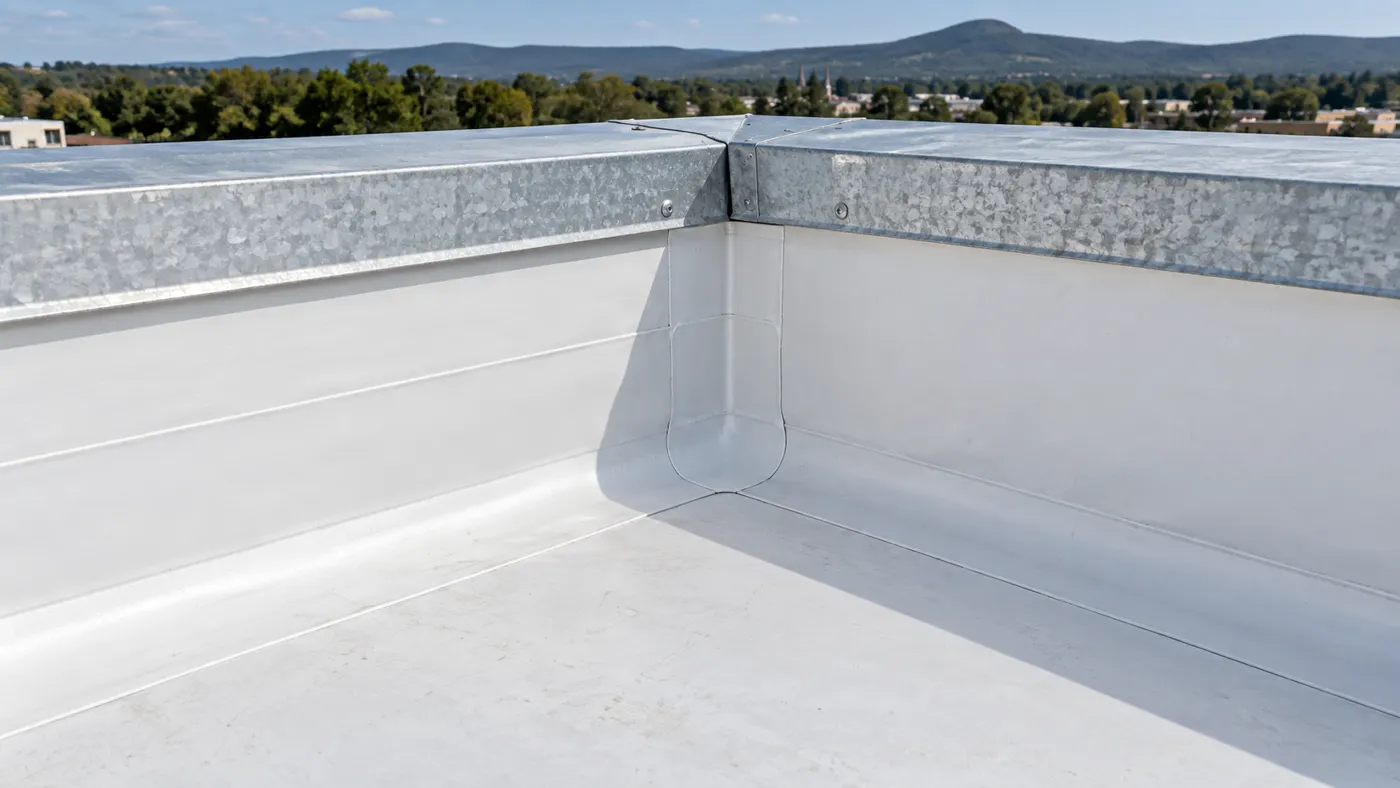
Flashing manages water where the roof meets walls, curbs, pipes and edges. These transitions move differently from broad roof surfaces and deserve close attention during leak diagnosis. Identify any recent equipment installation, wall work or previous flashing repair when describing the problem.
Ask for compatible details
A repair should match the roof system and the transition involved. Ask how the membrane, termination, sealant and metal components work together. Covering a failed detail with more sealant may provide only temporary relief if movement, attachment or concealed deterioration remains unresolved.
Coordinate roofing and equipment work
An HVAC curb or penetration can involve more than one trade. Confirm who is responsible for disconnecting equipment, modifying curbs and restoring the roof. Clearly defined responsibilities reduce gaps between proposals and help preserve relevant warranties.
Document the finished repair
Request photos of the affected area and a written description of the work completed. Keep them with the roof maintenance record so future inspections can track the same location. If surrounding materials are also deteriorated, ask whether a larger repair area is needed.
Questions before you book
Does every flashing leak need a new roof?
No. Some details can be rebuilt locally when surrounding materials remain suitable. The roof condition and moisture extent determine the appropriate scope.
Flat Roof Drainage & Ponding Water in Huntsville
Plan an assessment of standing water, drains and roof slope before deciding on a flat roof repair or replacement.
Find out why water remains
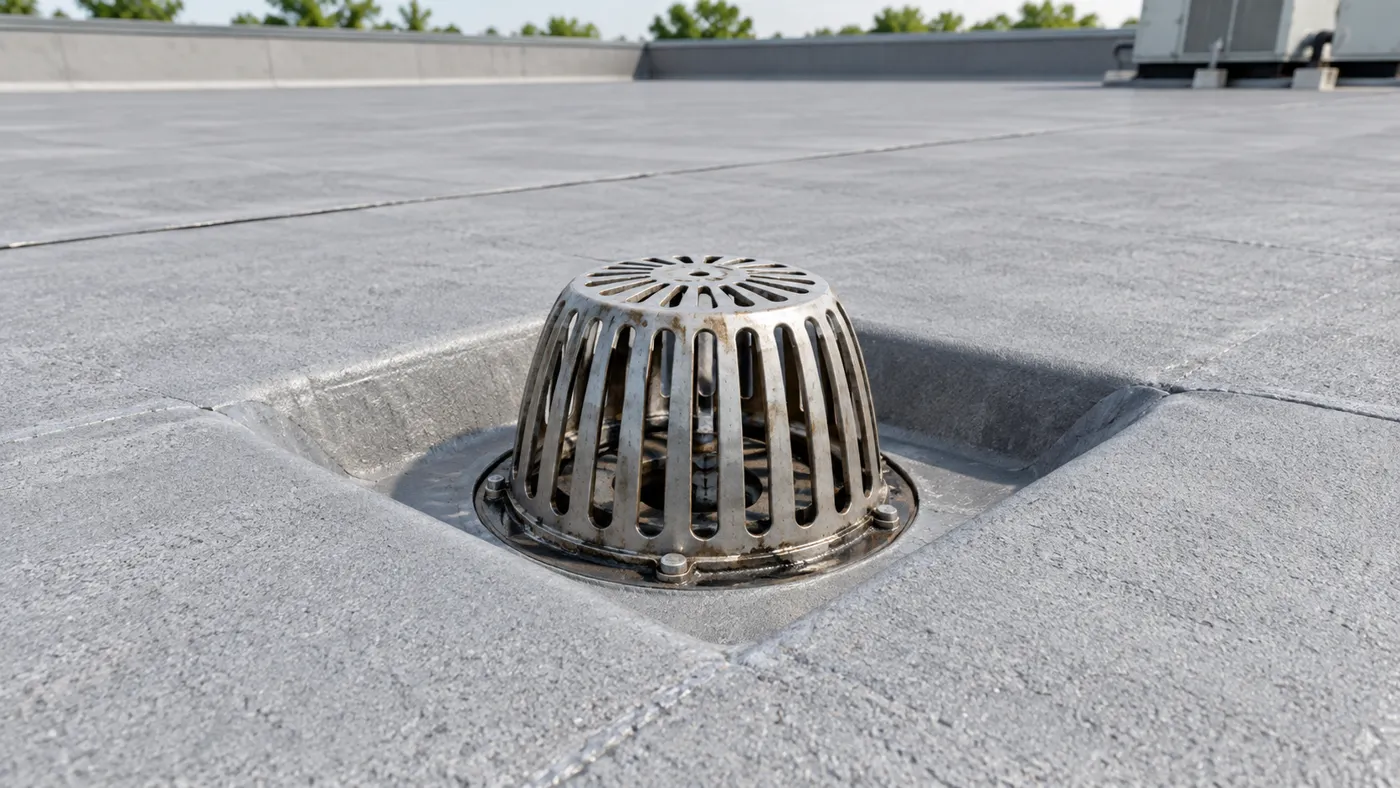
Persistent standing water can relate to blocked drainage, roof geometry, insulation layout or movement in the assembly. The cause matters more than the visible puddle alone. Record where water collects and how conditions change after rainfall, using safe observations available from building management.
Review the entire drainage path
The assessment should consider the roof surface, drains or scuppers, overflow provisions and downstream discharge. Correcting one restriction may reveal another issue. Drainage modifications may require coordination with a designer or other qualified professional, especially where structural concerns are present.
Include drainage in replacement planning
A new membrane does not automatically correct low areas. Replacement proposals should explain whether tapered insulation, drain modifications or other measures are included. Ask how the planned assembly will move water and how existing rooftop equipment affects that design.
Avoid isolated product promises
Do not select a coating or membrane solely because it is described as water resistant. Product requirements, warranty terms and the building’s drainage conditions still matter. Request a scope that addresses the underlying condition and identifies any limitations left in place.
Questions before you book
Should building staff cut a new drain opening?
No. Roof and drainage modifications require appropriate professional evaluation and coordination. Unplanned openings can damage the assembly and create additional hazards.