Document when the leak happens
Record the room, ceiling location, time and conditions when water appears. Note whether the issue follows wind-driven rain, prolonged rainfall or HVAC operation. Photos from inside the building and prior repair records can help narrow the investigation without exposing anyone to rooftop hazards.
Separate roofing from other water sources
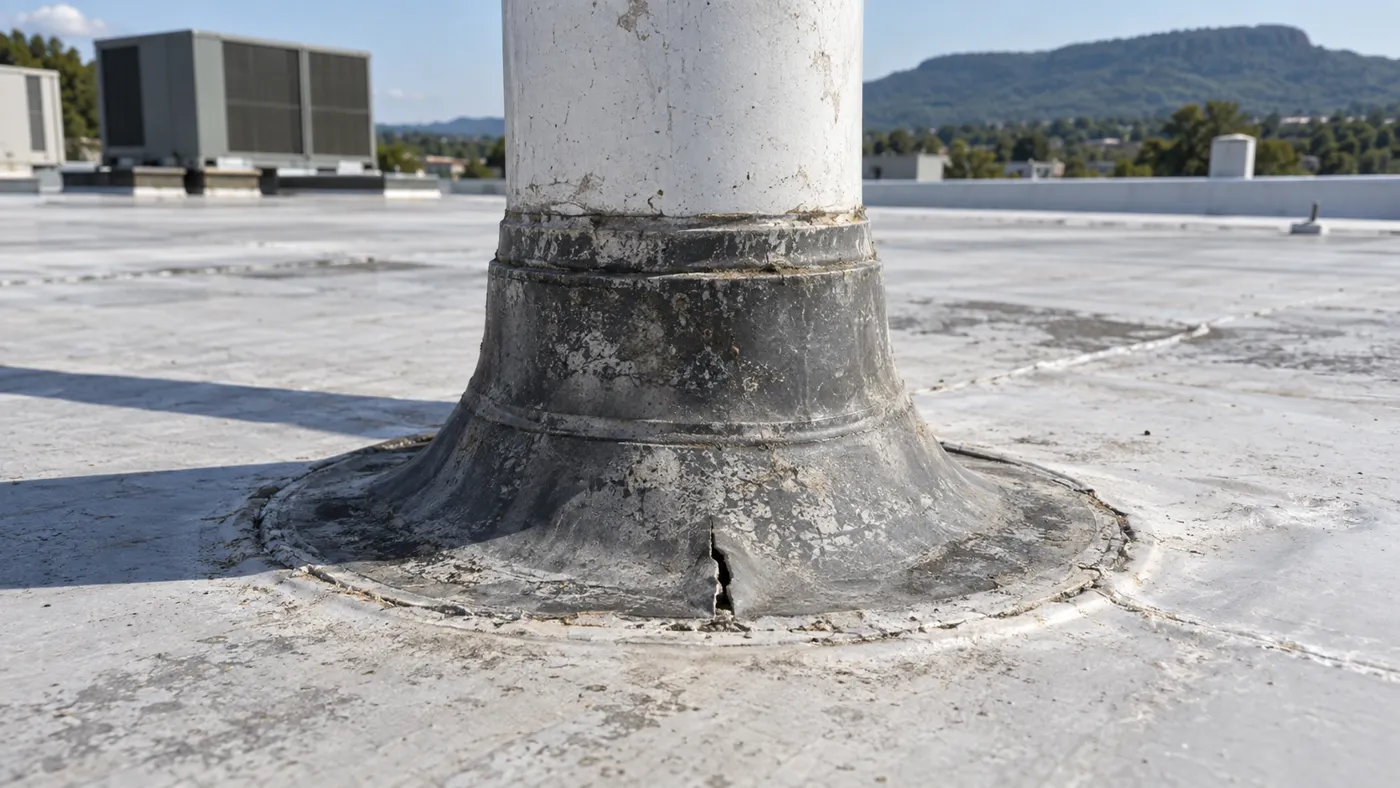
Roof penetrations, wall transitions and drainage details are common investigation points, but plumbing, condensation and equipment can also produce indoor moisture. Ask how we will distinguish among sources. A useful diagnosis explains the evidence and the limits of any testing rather than assuming every ceiling stain comes from the membrane.
Clarify temporary and permanent work
If immediate mitigation is proposed, ask what it is intended to accomplish and how the permanent repair will be developed. Record which areas are treated and what follow-up is required. For recurring leaks, a wider moisture assessment may be more useful than repeating the same patch.
Protect people and operations first
Keep occupants away from wet electrical equipment, sagging ceilings and unstable areas. Building management should coordinate any necessary emergency response. This website is an inquiry service and does not dispatch emergency crews. State the current conditions in your request, then confirm response timing directly with us.
Questions before you book
Should I send photos?
Describe the problem in the form first. Contact us to arrange a suitable way to send photos or documents. Do not climb onto the roof to obtain them.
Can a leak be guaranteed from an online description?
No. The source and repair scope require on-site evaluation, and some leaks need more than one diagnostic step.