
Build a record, not just a visit schedule
A maintenance program should preserve a roof plan, photos, repair history and warranty information. Start with a baseline condition assessment. That record makes it easier to distinguish new damage from old repairs and to budget for work by roof section.
Focus on details that change
Ask us to review accessible seams, flashing, penetrations, edge metal and drainage conditions. Rooftop service traffic can introduce new damage, so coordinate roofing records with HVAC and other trades. Drain clearing and debris removal should be performed by people with appropriate access and safety arrangements.
Set the schedule around the building
The appropriate frequency depends on roof condition, surrounding debris, manufacturer requirements and the use of the property. Significant weather or new rooftop work may justify an additional check. Confirm who receives reports and who can authorize repairs when a defect is identified.
Separate routine care from capital work
A maintenance agreement should explain included tasks, visit frequency, response procedures and excluded repair charges. Maintenance does not make a failed assembly sound again. Use the findings to plan larger repairs or replacement before repeated reactive work consumes the budget.
Questions before you book
Does maintenance preserve every warranty?
Warranty requirements vary. Obtain the actual warranty documents and confirm required inspections, records and authorized repair procedures.
Can multiple buildings share a maintenance plan?
Discuss the buildings and scheduling together. Each roof needs its own condition record, priorities and scope.
Commercial Roof Inspection in Huntsville
Plan a roof condition assessment for a purchase, recurring leak, maintenance program or capital replacement decision in Huntsville.
Match the inspection to your decision
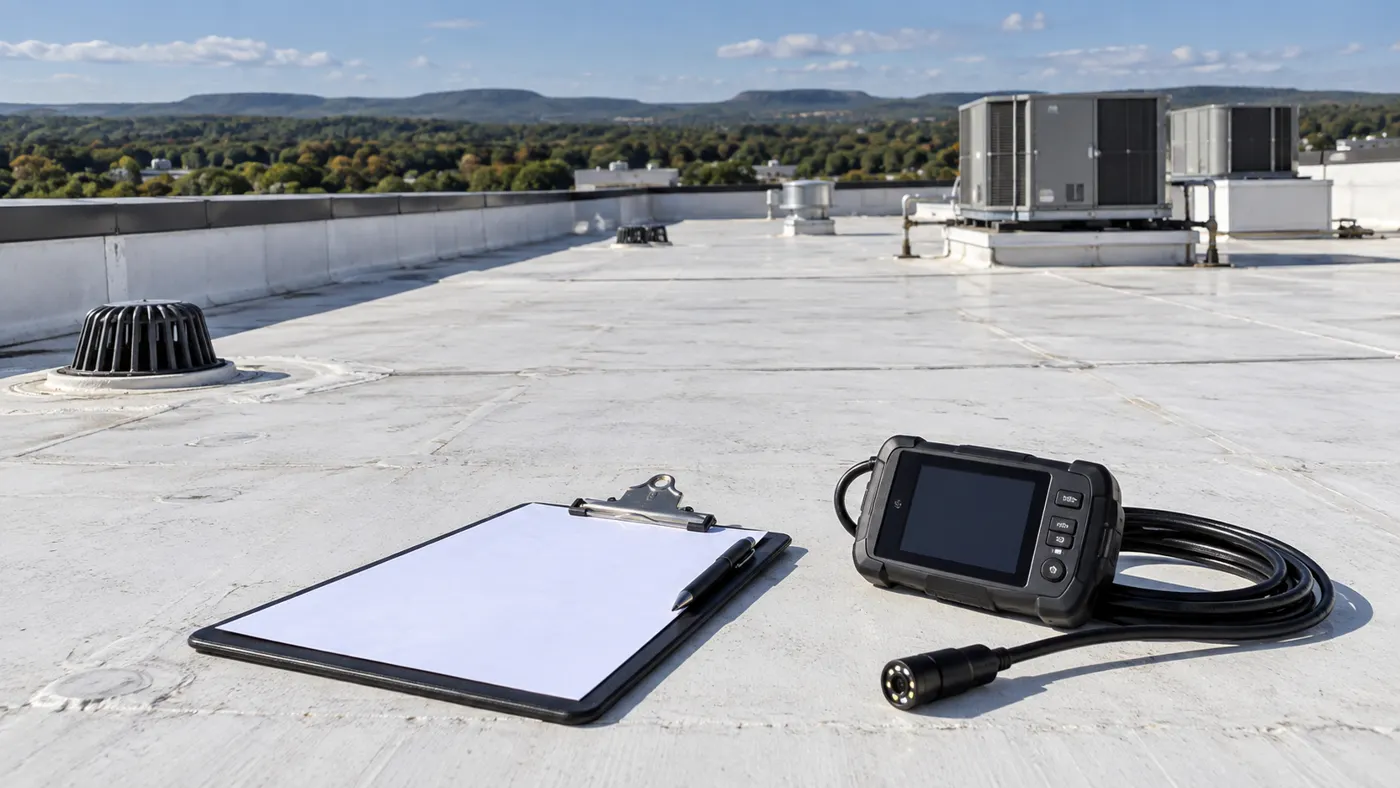
A routine visual review, leak investigation and pre-purchase assessment have different objectives. Explain whether you need repair priorities, remaining-service planning, documentation for a transaction or help comparing replacement proposals. Agree on the deliverables before the visit.
Ask what is included in the report
Useful documentation identifies roof sections, accessible conditions, photographs, observed deficiencies and recommended next steps. The report should distinguish visible findings from assumptions about concealed materials. Ask whether interior observation, drainage review and rooftop equipment transitions are included.
Understand testing and access limits
Moisture scanning, sample cuts and other investigative work may need separate authorization and restoration details. Weather, access restrictions and safety conditions can limit the review. A visual inspection is not a structural engineering evaluation and should not be represented as one.
Turn findings into priorities
Ask us to separate immediate concerns, near-term repairs and longer-term replacement considerations. Keep the report alongside warranties and repair records. For multi-building ownership, consistent roof-section names and photo locations make future comparisons much easier.
Questions before you book
Can an inspection establish an exact remaining roof life?
It can inform planning, but remaining life is an estimate influenced by hidden conditions, weather, maintenance and future damage.
What should I bring to the inspection request?
The building address or ZIP code, roof access arrangements, purpose of the assessment and any prior reports or warranty documents.